
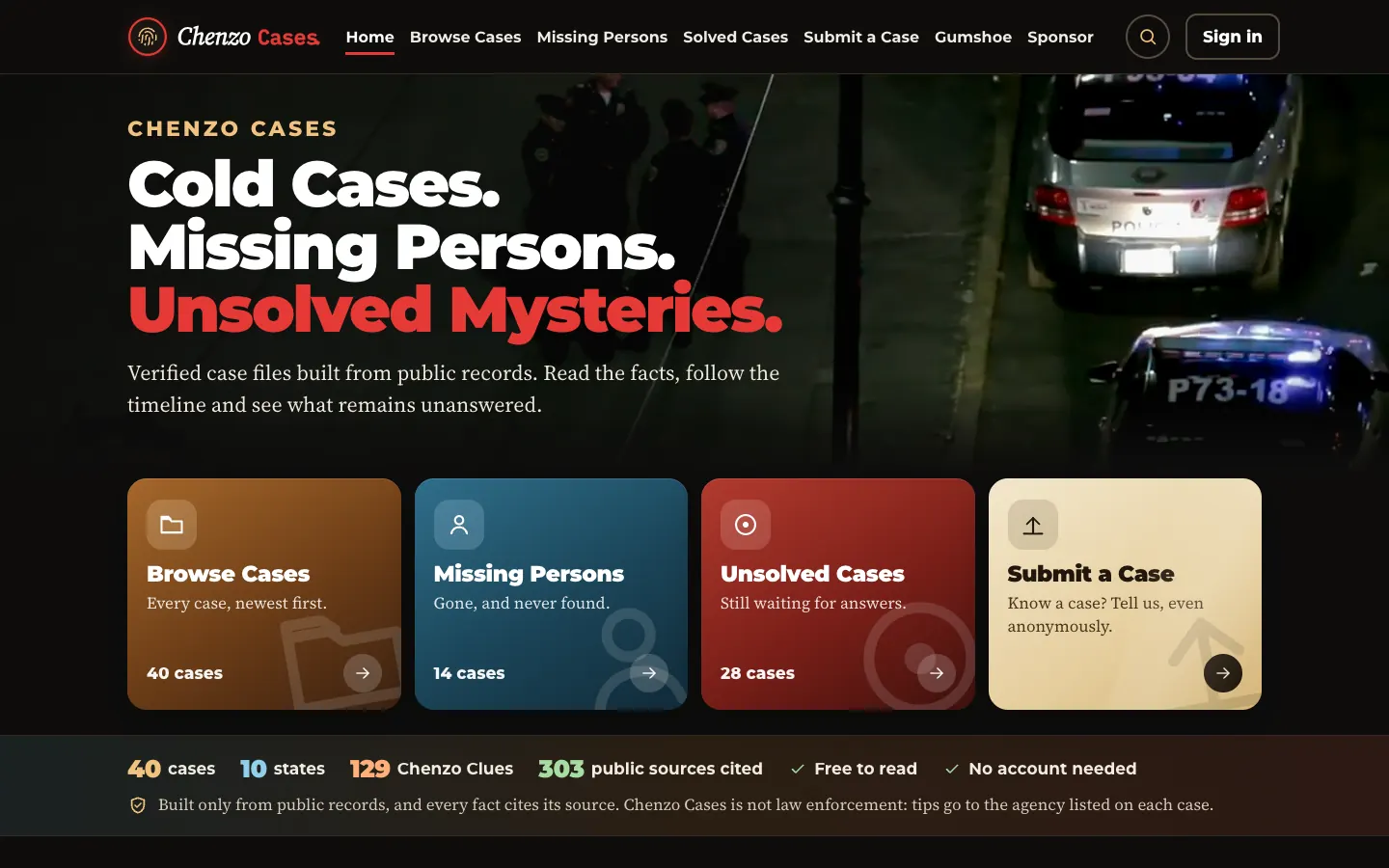
Some cases
go cold.
This site keeps
the lights on.
Chenzo Cases is a free, community-run library of cold cases, missing persons and unsolved mysteries. It started in my hometown, Flagler County, and it’s growing across the country. I designed it, built it, wrote the code, drew the logo and cut the videos. So if anything’s broken, there’s only one guy to call.
- 40case files
- 129Chenzo Clues
- 300+cited sources
- 10states so far
Twelve browser tabs is too many.
I’ve been a true crime fan my whole life. The kind who pauses the documentary to go dig up the court records. A while back I was asked to help on a sensitive digital project tied to an unsolved crime. I’ll leave it at that. But it showed me how scattered the public information really is: a press release here, a 1998 news story there, a NamUs listing nobody has touched in years.
So I built one place for it. Every fact comes from public records, and every fact shows its source. Real tips go straight to the detectives working the case. Chenzo Cases is not law enforcement, and it never pretends to be.
“Families shouldn’t need a law degree and twelve browser tabs to follow their own loved one’s case.”
What it is, in one line: a public database of cold cases, missing persons and unsolved mysteries, built only from public records, run with the community, free to read.
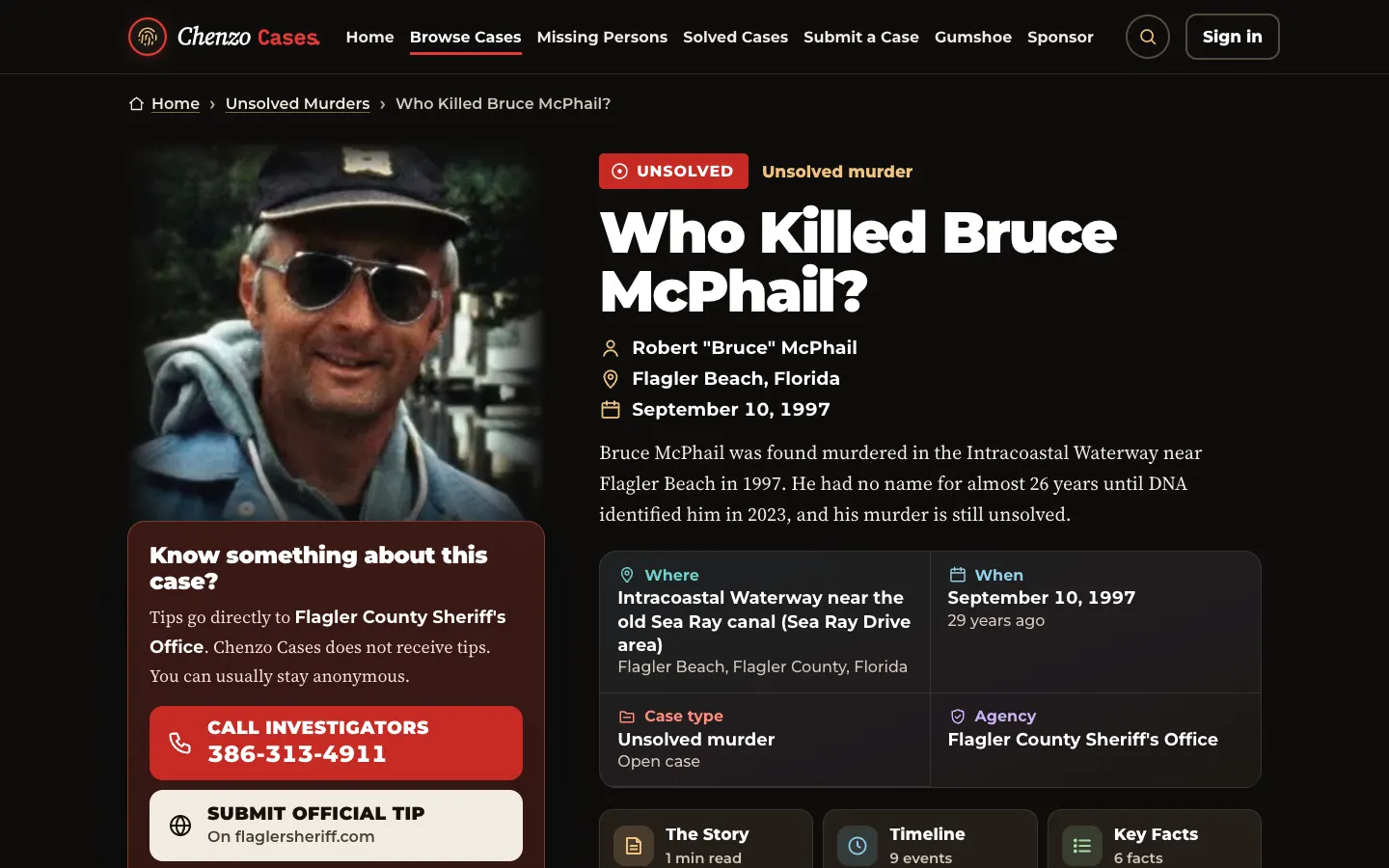
Case files you can actually read.
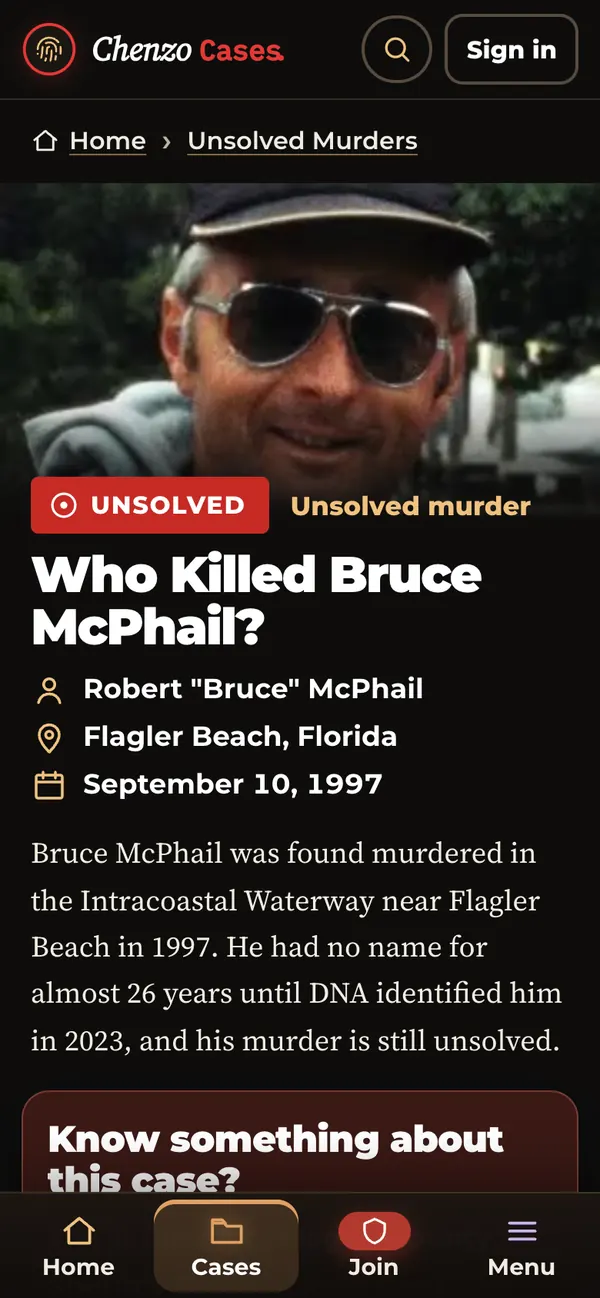
Each case reads like a file: who, where, when and which agency, then the story in plain words. The detective’s tip line sits up top where you can’t miss it.
- Timelines with a source on every line
- Key facts at a glance
- Source pop-ups instead of footnotes
- Open questions and tip-line cards
- Live predictive search that finds a case as you type
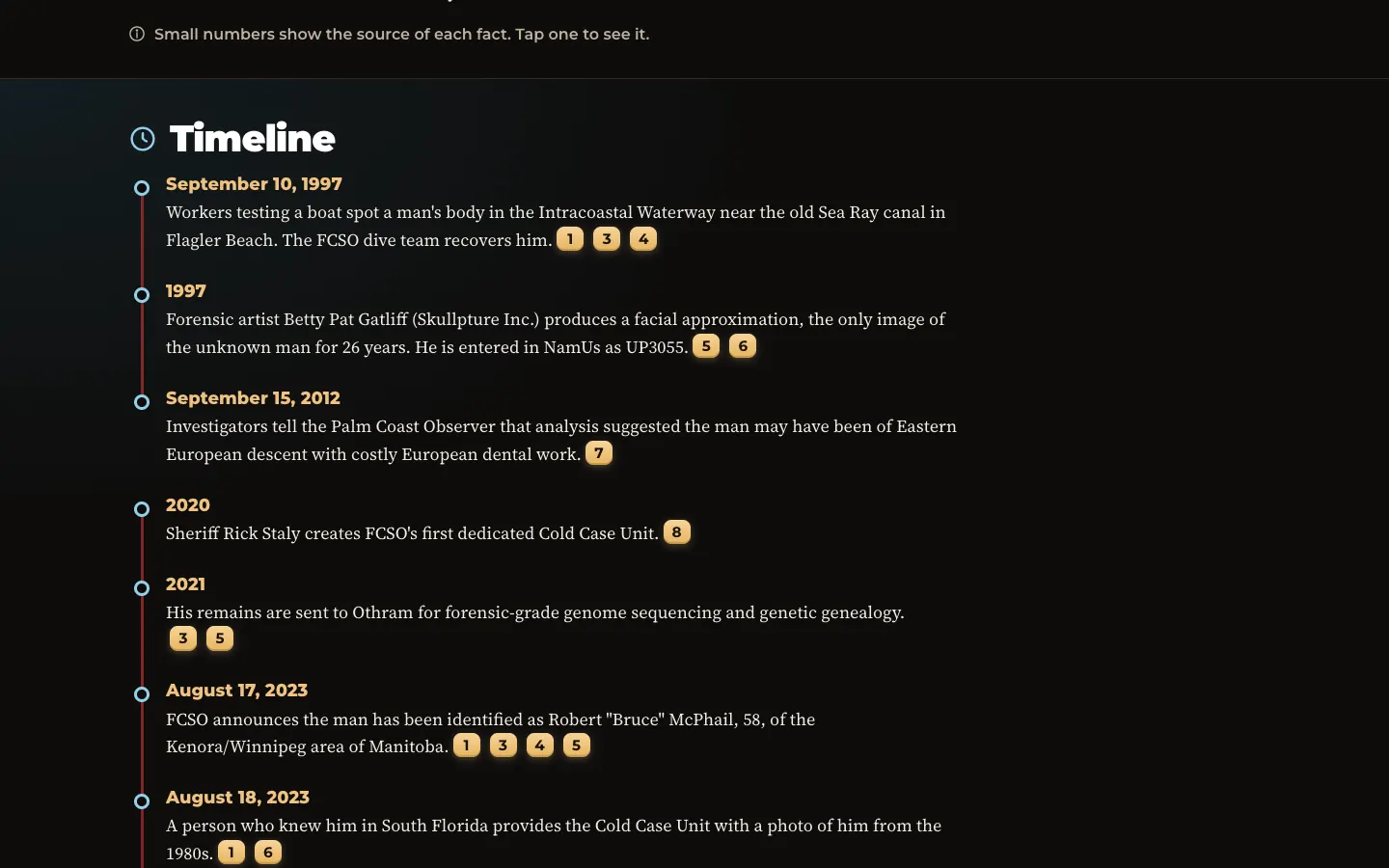
Tap a number, see the proof.
Every fact gets a little numbered chip. Tap it and the source pops up right there. No page jump, no hunting at the bottom of the page.
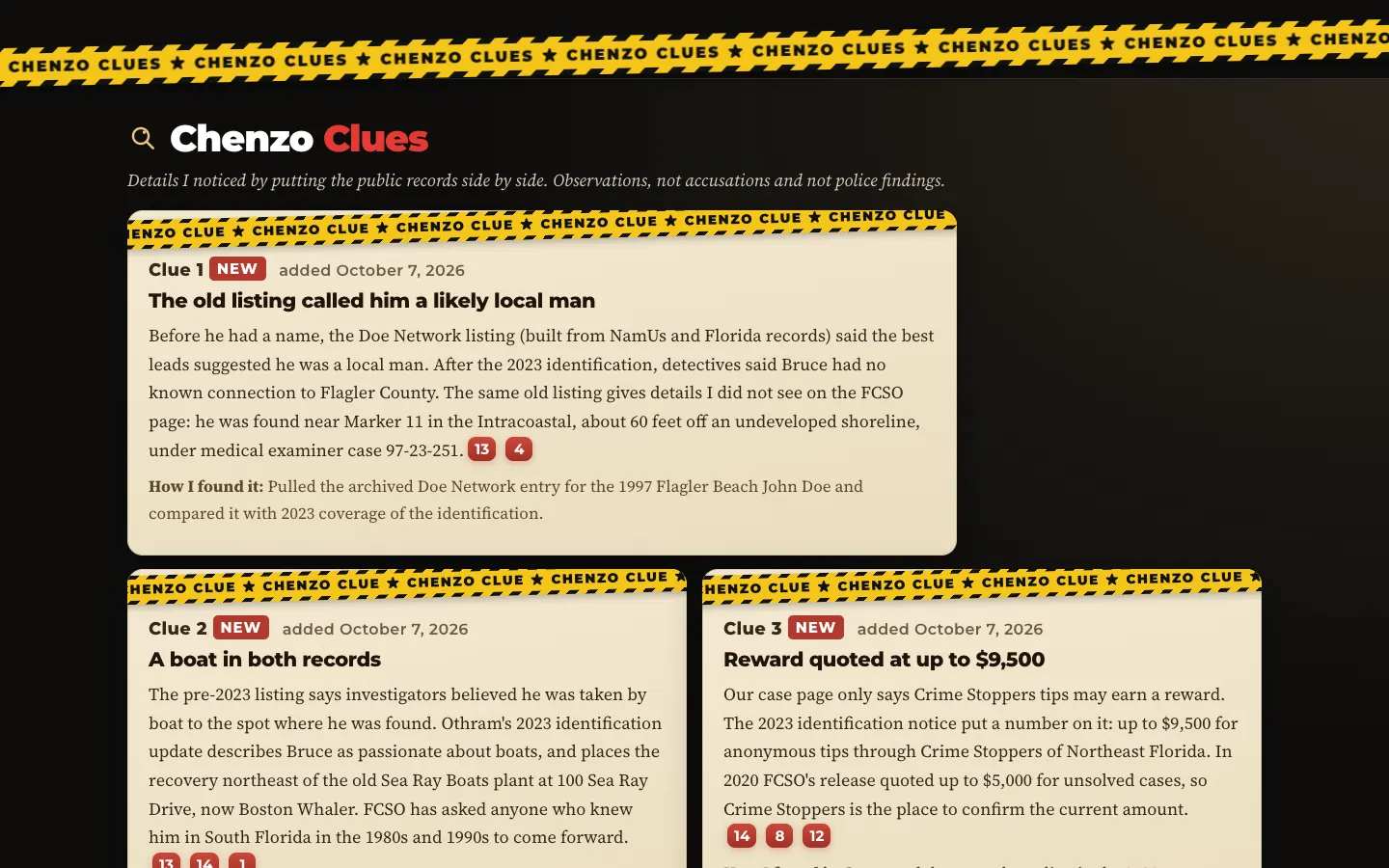
129 Chenzo Clues.
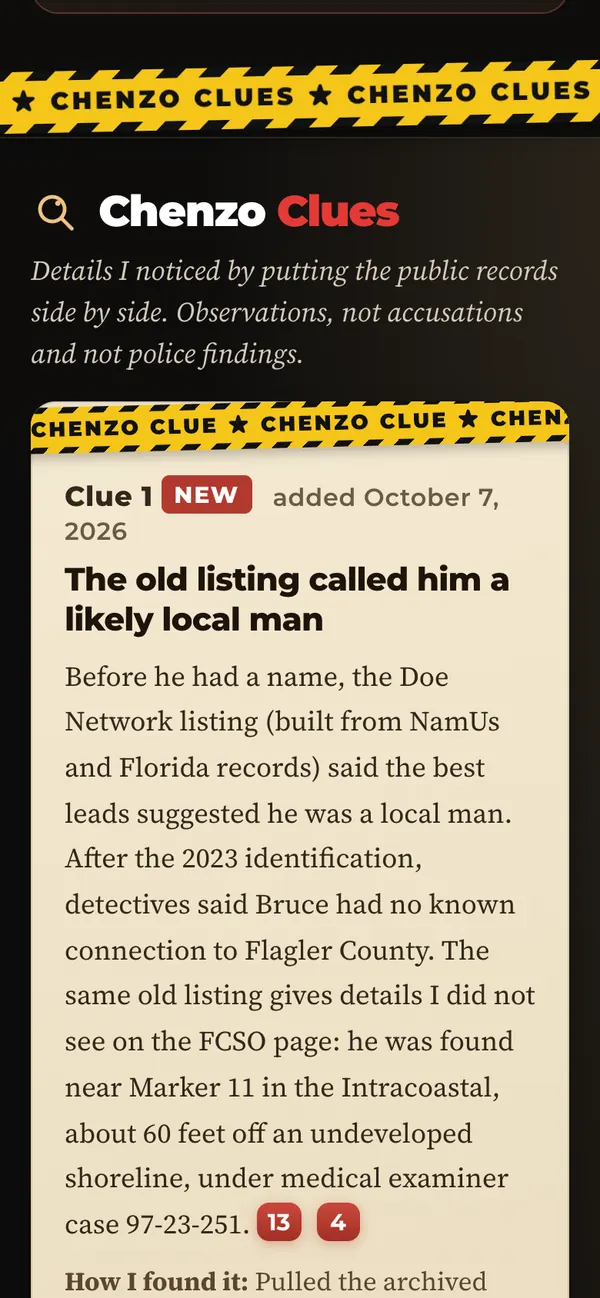
A Chenzo Clue is a detail I noticed by putting the public records side by side. Say a 1997 listing says one thing and a 2023 press release says another. That goes on a cream manila note, under a strip of caution tape, with a line about how I found it.
They’re observations, not accusations. If one means something to you, the card points you to the investigators, not the comments.
Built like an app. Tested on Grandma.
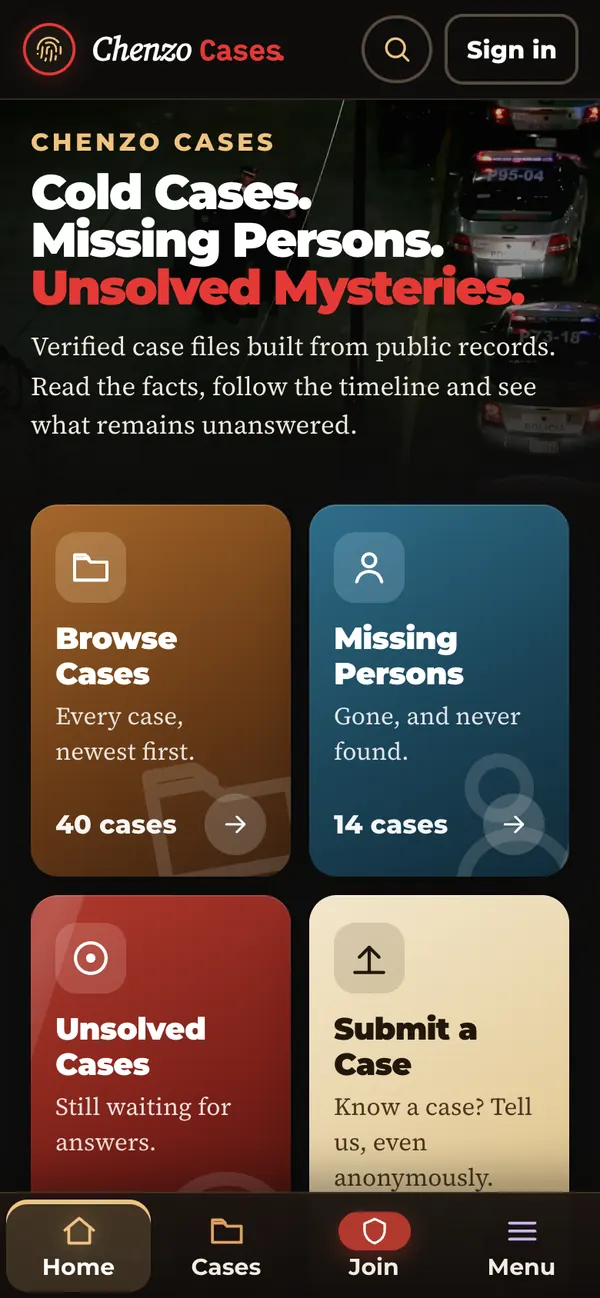
Most people find a case on their phone, usually from a Short or a share in a local Facebook group. So the phone version isn’t a squished desktop. It has a bottom tab bar like an app, pop-up sheets instead of page jumps, big type and big buttons.
My test was simple: could an 80-year-old who just heard about her old neighbor’s case find it, read it and call the tip line without help? If not, back to the drawing board.
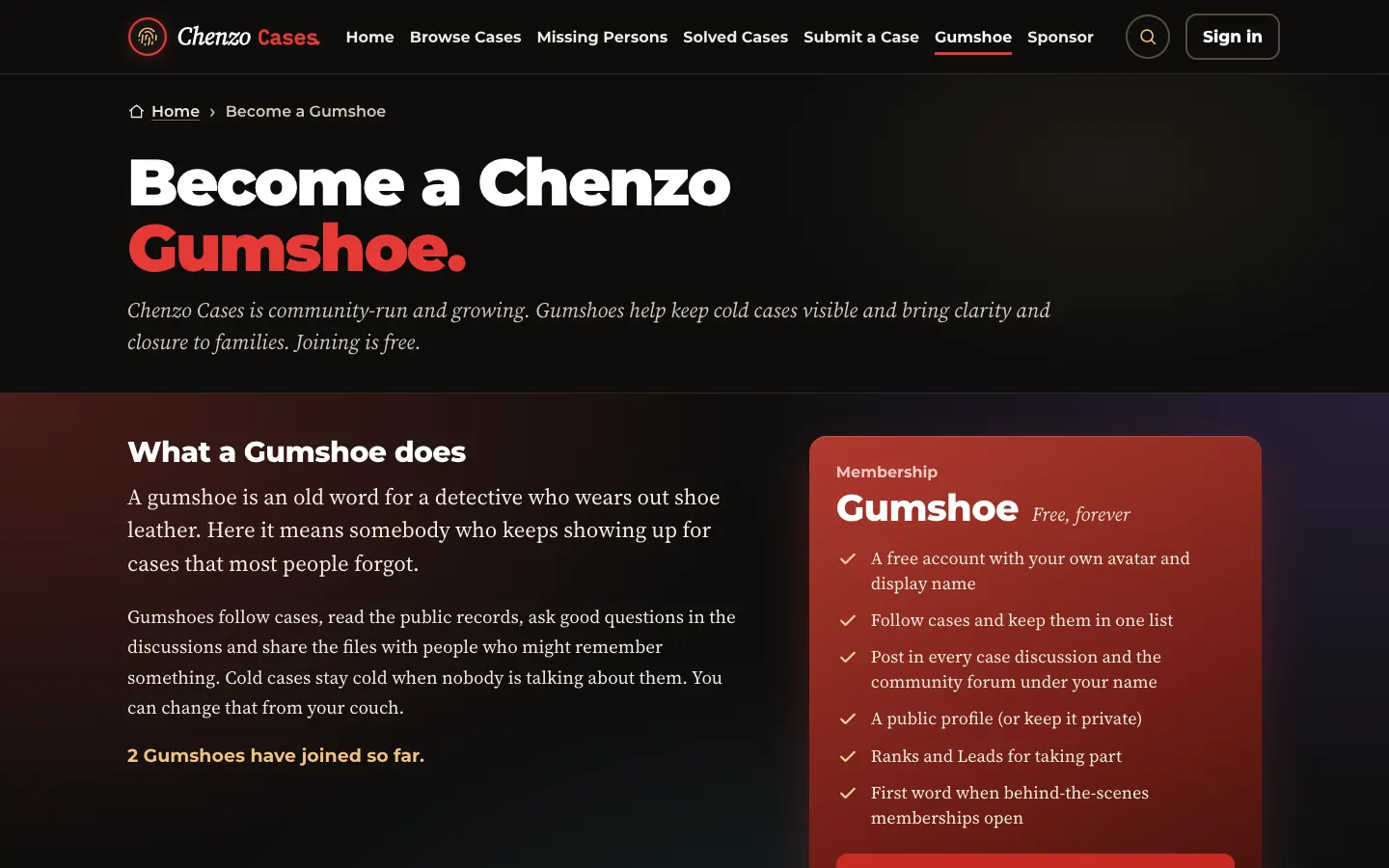
Gumshoes, with bouncers.
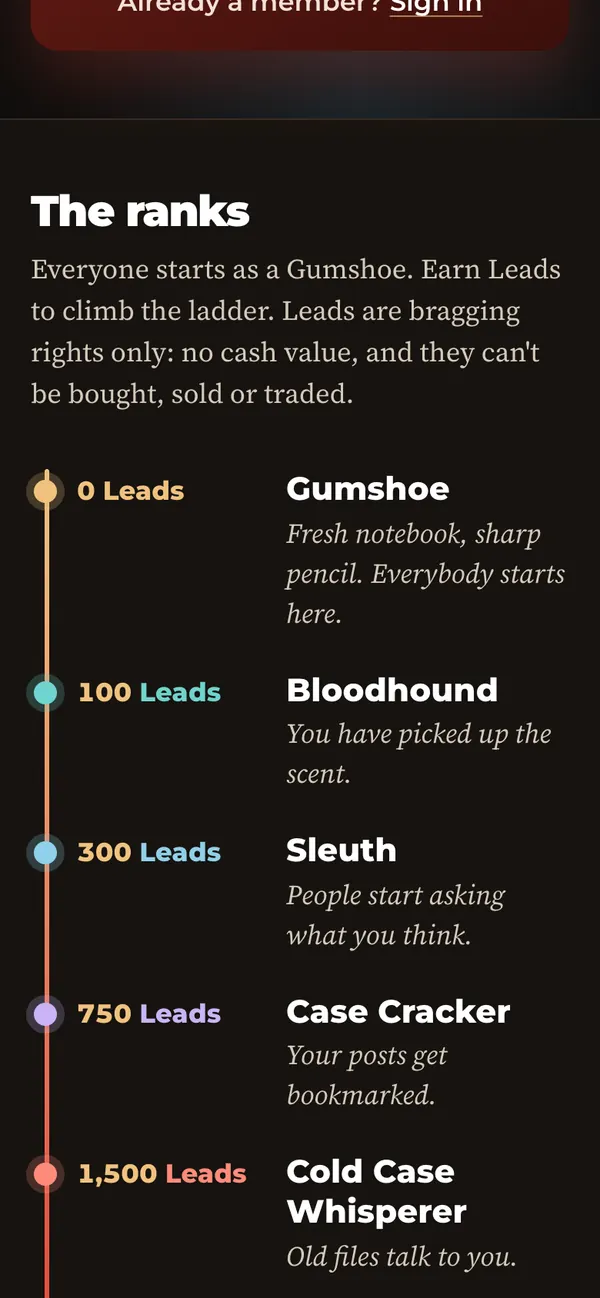
Members are called Gumshoes. Free accounts with avatars, display names, ranks and Leads points for pitching in, plus founding badges for the first folks through the door. There’s a community forum and a discussion on every single case.
Cold case talk can get ugly fast, so every post goes through spam filters, a slur blocker and AI moderation before anyone sees it.
The stuff you don’t see (but would miss).
Private case files
People who submit a case get their own password-protected file to follow it and add notes.
Submissions, even anonymous
Know a case that deserves attention? Send it in, with or without your name on it.
Sponsorships with PayPal
Local businesses can back the project with a monthly PayPal subscription.
Email alerts
Follow a case and hear about it when something new is added.
A weekly show
A YouTube episode every Sunday at 9pm Eastern, plus daily Shorts that each point back to a case page.
SEO and AI search
Structured data, sitemaps, llms.txt, a share card for every case, Search Console and IndexNow.
Automations
Routines that welcome new members and keep the case files up to date.
Cloudflare Workers + D1
Fast everywhere and cheap to run. Free to read means it has to be cheap to keep the lights on.
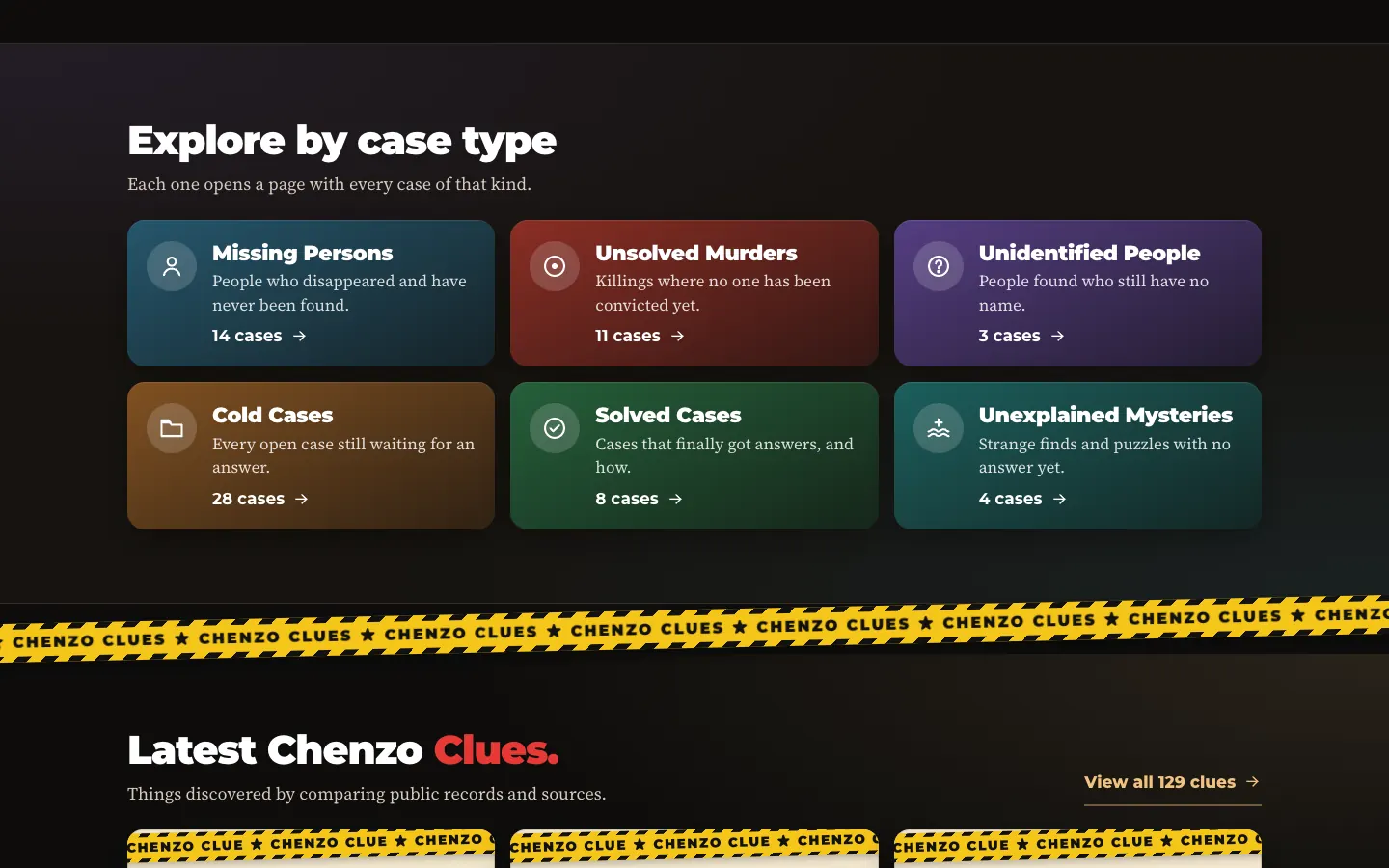
Moody. Never gory.
A dark case-file look, color-coded by case type so you can tell a missing person from an unsolved murder at a glance. Cream manila clue notes, caution tape, a fingerprint seal logo with a typewriter animation, and a slow police-night video behind the homepage. No crime scene photos. Ever.
One site, a whole toolbox.
Web design and UX for every age
Built to pass the 80-year-old test: big type, plain words, one tap to the tip line.
Web and app development
Accounts, forums, private password-protected portals and payments. Custom code, not a template.
Automation and AI
AI moderation that catches the junk, and routines that welcome members and keep case files fresh.
SEO and AI search
Structured data, sitemaps, llms.txt and share cards, so Google and the AI answer engines can find and quote every case.
Video and content marketing
A Sunday episode and daily Shorts, each one tied to a case page and pointing people back to it.
Branding
The fingerprint seal logo, the typewriter wordmark and the full brand kit.
Accessibility and performance
Large readable type, strong contrast, alt text on images, and pages that load fast on a phone with one bar of signal.
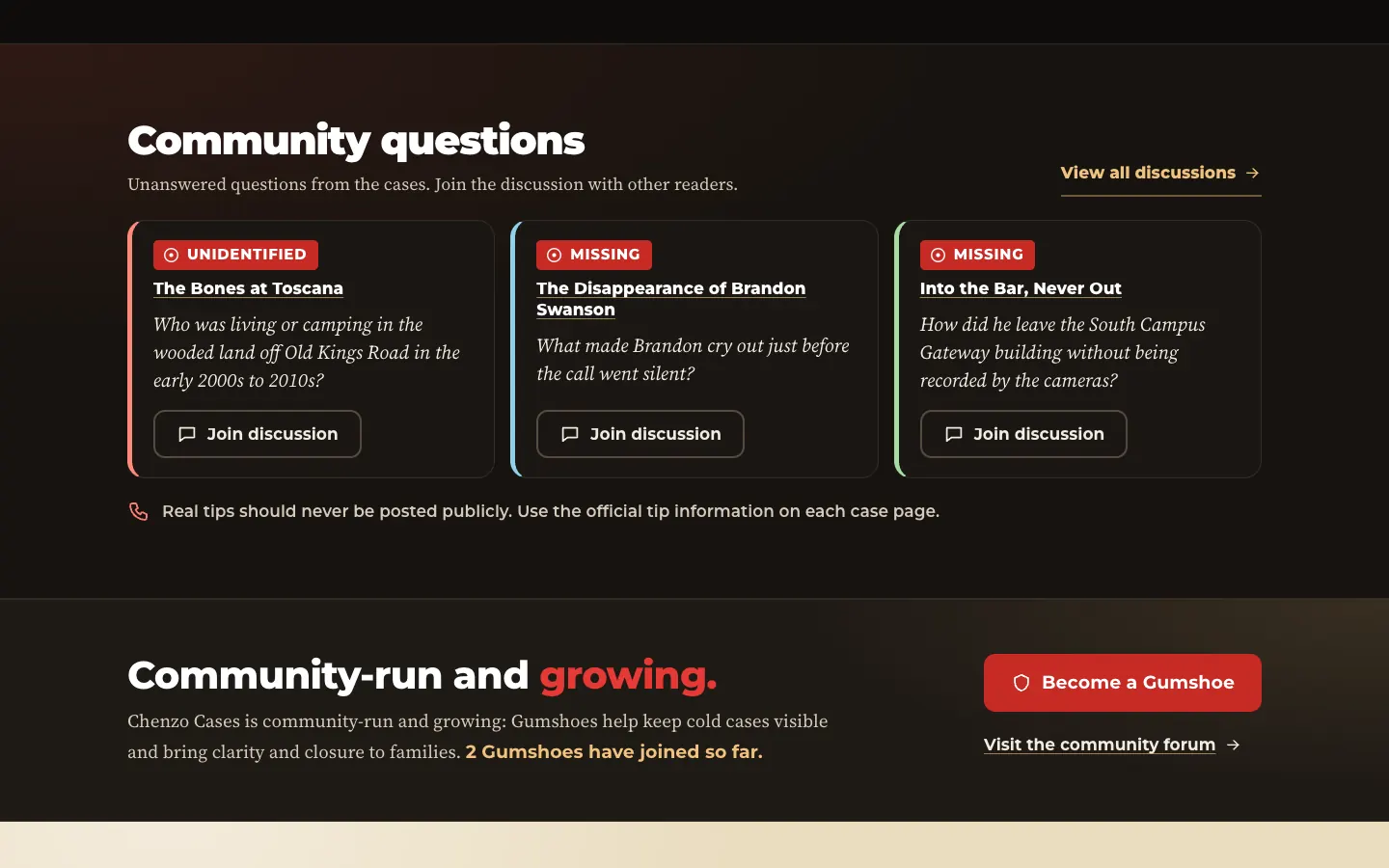
Open for business.
Launched in October 2026 and live at chenzocases.com. The first Gumshoes have joined, and real case submissions are already coming in. Not bad for a project that started as a guy who watches too many documentaries.
Common questions
What is Chenzo Cases?
A free, community-run public database of cold cases, missing persons and unsolved mysteries, built only from public records with every fact sourced. It started in Flagler County, Florida.
Who built it?
Chenzo of Chenzo Designs did the design, development, branding, SEO and video, start to finish.
Is it law enforcement?
No. Real tips go to the agency investigating each case, and every case page lists how to reach them.
Got an idea bigger than a brochure?
A portal, a community, a database, something that doesn’t exist yet. That’s my favorite kind of project. Tell me about yours.